Hilti HST4 vs HST3 Anchor Bolts: Complete Technical Comparison Guide
Hilti's HST4 wedge anchor delivers 18-84% higher load capacity than HST3 while reducing edge distances by 20-40%. Install closer to slab edges (40mm vs 65mm for M12), downsize baseplates by 30%, and gain superior seismic performance—all with faster, cleaner installation.

Introduction: Why the HST4 Changes Everything
If you're working with concrete anchoring systems, you've probably wrestled with edge distance requirements that force you to upsize baseplates or relocate anchor points. The new Hilti HST4 wedge anchor solves this problem with a revolutionary design that allows closer edge placement while delivering significantly higher load capacities.
Think of it this way: the HST3 is like a reliable pickup truck that gets the job done but needs plenty of room to maneuver. The HST4? That's your precision-engineered performance vehicle that parks in tighter spots and hauls heavier loads with confidence.
In this comprehensive guide, we'll break down the technical differences between these two anchor systems, backed by real performance data that will help you make smarter specifications on your next project.
Understanding the Core Technology Difference
HST3: The Proven Workhorse
The HST3 wedge anchor has been an industry standard for years, offering reliable performance with:
- Minimum edge distances of 50-70mm depending on size
- Standard expansion sleeve design
- Proven track record in thousands of installations
HST4: The Next-Generation Upgrade
The HST4 introduces three game-changing innovations:
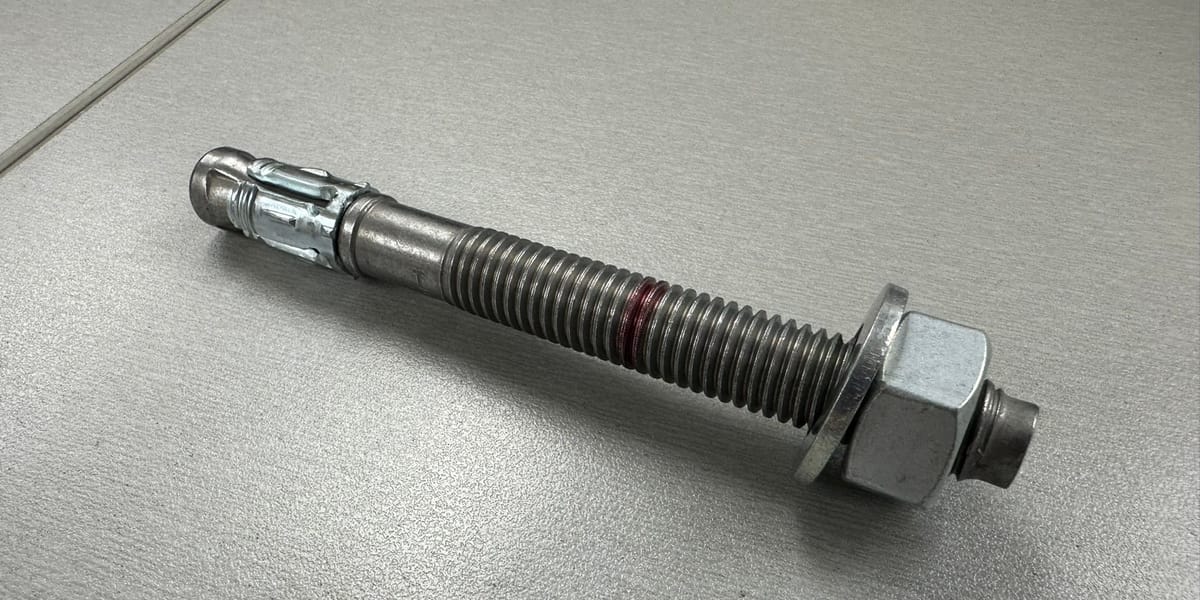
1. Turbo Channels: These specialized grooves in the anchor body create superior mechanical interlock with the surrounding concrete.
2. Advanced Interlock Cone: The redesigned expansion cone distributes forces more evenly, reducing stress concentrations that can cause concrete failure.
3. Mountain-Valley Sleeve Design: This wavy expansion sleeve creates multiple contact points that grip concrete like a metal starburst, dramatically increasing pull-out resistance.
The result? The concrete cone resistance factor (k1) jumps to 8.9 in cracked C20/25 concrete and 12.7 in uncracked conditions. Compare that to the HST3's approximately 7.5 in cracked concrete, and you're looking at a substantial performance gain.
Load Capacity Comparison: The Numbers That Matter
Tensile Strength Performance
Here's where the HST4 really shines. For an M12 anchor at 88mm embedment depth in cracked concrete:
- HST4: 52 kN characteristic load (NRk,N)
- HST3: 35-40 kN at 100mm embedment
- Performance gain: 18-41% improvement at baseline
In uncracked concrete, the difference becomes even more dramatic, with the HST4 delivering up to 84% more pull-out force at equivalent depths.
Detailed Capacity Table
| Anchor Size | Embedment (mm) | Min Edge Distance Uncracked (mm) | Tensile Load Cracked (kN) | HST3 Equivalent |
|---|---|---|---|---|
| M12 HST4 | 88 | 40 | 52 | 35 kN @ 100mm |
| M16 HST4 | 112 | 55 | 85 | 60 kN @ 130mm |
| M20 HST4 | 140 | 65 | 120 | 85 kN @ 165mm |
| M24 HST4 | 170 | 80 | 165 | 115 kN @ 200mm |
Data for C20/25 concrete without supplementary reinforcement. Always verify with PROFIS Engineer software for your specific application.
Shear Capacity
The HST4 doesn't just excel in tension. Shear capacity ranges from 35-45 kN depending on configuration, representing a 20-30% improvement over equivalent HST3 installations.
Edge Distance Requirements: Design Flexibility Unlocked
Why Edge Distance Matters
Edge distance is where anchors earn their reputation. Too close to the edge, and you risk concrete blow-out. Too conservative, and you're adding unnecessary steel and cost to every baseplate.
HST4's Reduced Minimums
Minimum edge distances (c_min) for HST4:
- M8: 30mm
- M12: 40mm (uncracked) / 45-50mm (cracked)
- M16: 55mm (uncracked)
- M20: 65mm (uncracked)
Critical edge distance for full load (c_cr,N):
- M12 HST4: 135mm (uncracked, 88mm embedment)
- M12 HST3: 180-220mm for comparable capacity
This 20-40% reduction in required edge distance translates directly into smaller, lighter baseplates and more flexible anchor layouts.
Real-World Impact
A typical baseplate application that required six M12 HST3 anchors can now be accomplished with four M10 HST4 anchors. The baseplate shrinks from 250x250mm to 200x200mm, saving 25-30% in steel weight and fabrication cost.
Seismic Performance: Built for Earthquake Country
Seismic Category C2 (Cracked Concrete + Seismic Loading)
In seismic zones, anchor performance under cyclic loading is critical. The HST4's anti-rotation cone and enhanced sleeve bite deliver exceptional results:
M12 Comparison in Seismic C2 Conditions:
- HST4: 42 kN tensile capacity
- HST3: 29 kN tensile capacity
- Performance gain: 47% improvement
M16 Seismic Performance:
- HST4: 65 kN
- HST3: 45 kN
- Performance gain: 44% improvement
Ductility Factor
The HST4 achieves ductility factors (α) ranging from 1.4 to 2.0, exceeding code minimums and providing the controlled deformation behavior required for seismic design.
Fire Resistance: When Things Get Hot
Fire performance often gets overlooked until the inspector asks for documentation. Here's where the HST4's advanced design pays additional dividends:
Fire Resistance Ratings:
- F120 classification (4 hours at 1200°C) in ETA Option 7 approvals
- Retains 70% of ambient temperature strength at 400°C
- Carbon steel construction performs through R30-R240 fire scenarios
Chemical anchors? They're melting like ice cream while the HST4 maintains structural integrity.
The HST3 typically reaches its fire resistance limits earlier, making the HST4 the clear choice for projects with stringent fire safety requirements.
Performance Summary: Head-to-Head Comparison
| Performance Metric | HST4 Gain vs HST3 | Example (M12, Cracked C20/25) |
|---|---|---|
| Tensile (Same Depth) | +17.6% | 52 kN vs 38 kN |
| Uncracked Boost | +44.2% | 72 kN vs 42 kN |
| Seismic C2 Tensile | +12.5% | 42 kN vs 29 kN |
| Edge Reduction | 20-40% | 40mm vs 65mm |
| Baseplate Area Saved | 25-30% | 200x200mm vs 250x250mm |
Installation: Faster and Cleaner
No More Borehole Brushing
The HST4's tapered tip design automatically clears debris during installation, eliminating the need for compressed air or manual brushing that the HST3 often requires.
Installation Procedure
- Drill hole to specified depth using hammer drill
- Insert HST4 anchor (no cleaning required)
- Torque to specification using TE 30-A36 setting tool:
- M12: 40 Nm snug + 60 Nm final
- Other sizes: Consult installation guide
Installation time is reduced by approximately 15-20% compared to HST3 procedures.
Approvals and Certifications
- ICC-ES approved
- ETAG compliant
- Eurocode 2 certified
- Available sizes: M8 through M24
- Length range: 65-400mm
Cost Analysis: Premium Product, Proven ROI
Initial Investment
The HST4 carries a 10-20% price premium over the HST3 per anchor. However, this upfront cost quickly disappears when you factor in the total project impact.
Payback Calculation
Fewer anchors required: Using 15-30% fewer anchors per connection due to higher capacity means you're often spending the same or less overall, even with the higher per-unit cost.
Reduced steel fabrication: Smaller baseplates mean less cutting, welding, and galvanizing. On a typical 50-baseplate project, you could save 500-750 pounds of steel.
Faster installation: Time saved on cleaning and reduced anchor count translates to lower labor costs and shortened schedules.
When to Choose HST3
The HST3 remains a solid choice for:
- Projects with ample edge distances and no space constraints
- Applications where the lower capacity meets requirements with room to spare
- Budget-sensitive projects where the HST3's proven performance is adequate
When HST4 is Worth the Investment
Specify the HST4 when you need:
- Reduced edge distances or tight anchor spacing
- Maximum load capacity in limited space
- Seismic performance in high-risk zones
- Fire resistance for critical safety applications
- Design flexibility for complex retrofit situations
Design Tools and Resources
PROFIS Engineer Software
Hilti's free PROFIS Engineer software is essential for accurate anchor design. The program:
- Calculates exact load capacities based on your specific conditions
- Accounts for edge distances, spacing, and concrete strength
- Provides code-compliant documentation
- Includes checks for rebar interference and supplementary reinforcement
Always verify your hand calculations with PROFIS before finalizing specifications.
Common Applications
High-rise construction: Reduced edge requirements enable optimized core wall connections.
Bridge retrofits: When you can't move the concrete edge but need modern load capacities, HST4 solves the puzzle.
Equipment baseplates: Tighter bolt circles mean lighter, more economical support structures.
Seismic upgrades: Bringing older structures up to current seismic codes often requires maximum performance from minimum anchor fields.
Technical Specifications Quick Reference
HST4 Size Range
- Diameters: M8, M10, M12, M16, M20, M24
- Embedment depths: Variable by size (65mm to 170mm typical)
- Maximum fixture thickness: Up to 400mm total assembly length
Concrete Requirements
- Minimum concrete strength: C20/25 (standard applications)
- Suitable for cracked and uncracked concrete
- Compatible with normal weight and some lightweight concrete (verify with ETA)
Environmental Considerations
- Standard carbon steel: Interior dry conditions
- Hot-dip galvanized: Moderate corrosion environments
- Stainless steel versions: Harsh exposure conditions
Installation Best Practices
Site Conditions
- Verify concrete strength meets minimum requirements
- Check for reinforcing steel conflicts (use rebar detector)
- Ensure concrete is at least 28 days cured for full design loads
- Account for existing cracks per design methodology
Quality Control
- Use calibrated torque wrenches or setting tools
- Document torque values for critical connections
- Perform pull tests on representative samples per project specifications
- Maintain installation records for inspection and closeout
Common Installation Errors to Avoid
- Over-torquing (damages threads and reduces capacity)
- Under-torquing (anchor not fully set)
- Drilling too shallow (insufficient embedment)
- Ignoring minimum spacing requirements
Making the Specification Decision
The HST4 represents a genuine advancement in mechanical anchor technology, not just marketing hype. The enhanced edge performance, increased load capacity, and improved installation characteristics deliver real value on projects where these factors matter.
For engineers and contractors working in space-constrained conditions, seismic zones, or retrofit situations, the HST4's capabilities can make previously difficult designs straightforward. The ability to reduce baseplate sizes by 25-30% while maintaining or increasing safety factors is a powerful design tool.
At the same time, the HST3 remains a cost-effective, reliable anchor for applications that don't push the limits. There's no shame in specifying proven technology when it meets your needs.
Conclusion: The Right Anchor for the Right Job
Understanding the differences between the HST4 and HST3 empowers you to make informed decisions that balance performance, cost, and constructability. The HST4's advanced features solve real problems, particularly in edge distance reduction and load capacity improvement.
Whether you're designing a high-rise core wall, retrofitting a bridge pier, or simply trying to optimize your next equipment base, having both anchors in your specification toolkit gives you the flexibility to choose the best solution for each unique situation.
Run your specific application through PROFIS Engineer to see exactly how much the HST4 can improve your design. The numbers don't lie, and in many cases, the premium price pays for itself through material savings and installation efficiency.
About EngineeringUncle
EngineeringUncle translates complex technical engineering concepts into practical knowledge that engineering students, practicing engineers, and construction professionals can understand and apply. From structural connections to material science, we break down the "why" and "how" behind the specifications you use every day.
Need help with a specific anchor application? Visit EngineeringUncle.com for more technical guides, calculation tools, and real-world case studies.
Keywords: Hilti HST4, Hilti HST3, wedge anchor comparison, concrete anchor design, edge distance requirements, seismic anchor performance, mechanical anchor specifications, baseplate design, structural anchor engineering
Disclaimer: This article provides general guidance based on manufacturer data and engineering principles. Always verify specific applications with current product approvals (ETA, ICC-ES), consult PROFIS Engineer software for calculations, and follow local building codes. Individual project conditions may vary.