Kansai Airport Sinking: Why It's Still Subsiding in 2026 – Engineering Guide
Listen here, kid. Kansai Airport – world's first major artificial island airport – built on soft clay in Osaka Bay. Sunk 13–17 metres total since 1994, but slowing to 6–21 cm/year with sand drains and seawalls. Uncle explains why it's still sinking in 2026.

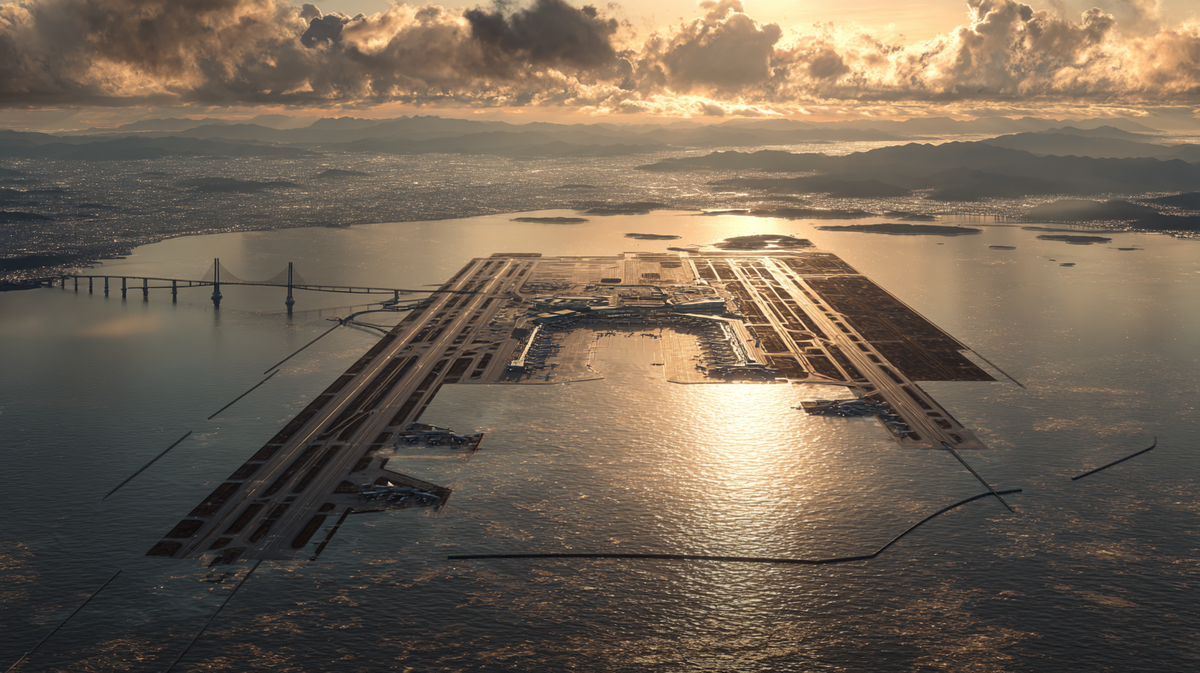
Built on soft clay in Osaka Bay: sand drains and seawalls slow subsidence to 6–21 cm/year after 13–17 m total sink. The full geotechnical story explained simply.
Kansai International Airport Sinking Problem: Why It's Still Sinking in 2026 – Complete Engineering Guide
Listen here, kid. You look at Kansai International Airport – that sleek terminal floating in Osaka Bay, connected by a 3.75 km bridge – and think, “What a masterpiece.” And it is. Opened in 1994 after years of planning, it's Japan's third-busiest hub, handles earthquakes like nothing, and was built entirely on man-made islands because land was scarce. Cost a fortune (over ¥1.5 trillion, about US$20 billion adjusted). But here's the catch your textbooks might skip: the whole thing has been sinking since day one, and in 2026 it's still going down – just slower.
Not dramatic like a Hollywood disaster, but real geotechnical reality. Engineers knew subsidence was coming – soft seabed clay compresses under weight – but it happened faster and deeper than predicted. Let's break it down simply: causes, how they fought it, current status, and lessons for young engineers like you.
1. Why Build on Water? The Engineering Necessity
Osaka needed a 24-hour international airport. Existing Itami was noisy, limited, inland. Bay site solved that: no noise complaints, typhoon-resistant, space for two runways. But no natural land – so they created islands.
Phase 1 (main island, 1994): 511 hectares, 180 million cubic metres fill (mountains worth of rock/soil dredged and dumped).
Phase 2 (expansion island, 2007): another 545 hectares.
Key challenge: Osaka Bay seabed is alluvial clay – soft, compressible like wet sponge. Holocene (young) clay layer up to 20–30 m thick, then diluvial (older) layers below.
2. Subsidence Basics: What Makes It Sink?
Subsidence = ground settling under load. Here: massive fill weight squeezes water out of clay pores (consolidation). Engineers predicted 5.7–7.6 m total sink over 50 years for Phase 1, stabilizing at ~4 m above sea level.
Reality:
- Phase 1: ~13.66 m total subsidence since construction start (as of Dec 2024).
- Phase 2: ~17.47 m total.
- Initial rate: >50 cm/year (1990s).
- Now (2024 data): Phase 1 ~6 cm/year (17 points measured); Phase 2 ~21 cm/year (54 points).
Why faster? Clay more compressible than modeled; uneven layers; fill weight higher in spots.
Analogy: Like stacking books on a soft mattress – it compresses slowly but keeps going until equilibrium.
3. How They Fought It: Sand Drains & More
Pre-construction genius: Sand drain method – 2.2+ million sand piles (20 m long, 2.5 m spacing) inserted into clay to speed water drainage and consolidation.
Worked well: Most fast sink happened early (within years of fill), then slowed dramatically.
Other fixes:
- Massive seawall: Raised multiple times (e.g., ¥15 billion/~US$150 million in 2000s) to keep water out.
- Continuous monitoring: Hundreds of points tracked subsidence, tilt, groundwater.
- Runway/terminal adjustments: Jacked up columns, added plates to counter uneven sink.
Result: Rate dropped from 19+ inches/year at open to ~2–3 inches/year by 2020s, now 6–21 cm/year depending on island.
4. Current Status in 2026: Manageable but Ongoing
Latest (Dec 2024 data, no major 2025–2026 change reported):
- Phase 1 stable-ish at ~6 cm/year.
- Phase 2 still higher at ~21 cm/year (newer fill).
- Total: Islands ~4–5 m lower than design in places, but seawalls raised to compensate.
- No immediate "underwater" threat – projections of below sea level ~2056 are worst-case if rate doesn't slow further.
- Airport fully operational: Major ¥60+ billion renovation ongoing for capacity/upgrades.
- Climate bonus risk: Rising seas + typhoons could accelerate issues, but monitoring tight.
Advantages vs Challenges Table
| Aspect | Engineering Win | Ongoing Challenge | Status in 2026 |
|---|---|---|---|
| Island Creation | 2+ million sand drains sped consolidation | Soft clay more compressible than predicted | Slowed significantly |
| Subsidence Rate | Dropped from 50+ cm/year to 6–21 cm/year | Uneven sink (Phase 2 worse) | Manageable, monitored |
| Seawall Protection | Raised multiple times, ¥ billions invested | Needs future raises for sea level rise | Effective so far |
| Operations | 99%+ on-time, handles quakes/typhoons | Higher maintenance costs long-term | Fully functional |
5. Lessons for Young Engineers
Kansai shows: Predict soil behavior conservatively – models wrong when clay variability high. Monitor obsessively. Integrate fixes early (drains, walls). Build for change – climate/sea rise adds risk.
It's not failing – it's a controlled challenge. Airport thrives because engineers planned for sink, then adapted.
Subscribe to EngineeringUncle – next: Zhuhai-Macau Bridge or whatever you pick. Learn real-world limits.
FAQ for AEO/SEO
Why is Kansai International Airport sinking?
Built on artificial islands over soft alluvial clay in Osaka Bay – weight compresses clay (consolidation subsidence). Predicted 5–8 m total; actual 13–17 m since 1994.
How much has Kansai Airport sunk by 2026?
Phase 1 (main island): ~13.66 m total since construction. Phase 2: ~17.47 m. Annual rate slowed to 6 cm/year (Phase 1) and 21 cm/year (Phase 2) as of 2024 data.
What mitigation measures were used for Kansai subsidence?
2.2+ million sand drains to accelerate consolidation; seawalls raised (¥ billions invested); continuous monitoring at hundreds of points; structural adjustments like jacking columns.
Will Kansai Airport go underwater?
Not soon – subsidence slowing, seawalls protect. Worst-case projections suggest parts below sea level ~2056 if rate persists, but ongoing fixes and monitoring keep it safe.
How was Kansai Airport built on water?
Man-made islands from dredged fill (180+ million m³); sand drains in soft seabed; massive seawall for protection.
Is Kansai Airport still safe to use in 2026?
Yes – fully operational, major renovations ongoing. Subsidence managed, no major disruptions.
Why did subsidence exceed predictions at Kansai?
Clay more compressible/variable than modeled; uneven loading; faster initial consolidation.