Hong Kong-Zhuhai-Macau Bridge: Engineering Feat, Overbudget & Delays – Full Guide
Listen here, kid. Hong Kong-Zhuhai-Macau Bridge – 55 km of sea link with immersed tunnel and artificial islands. Took 9 years extra, cost doubled to HK$120B+, and usage still low in 2026. Uncle explains the engineering, delays and reality.

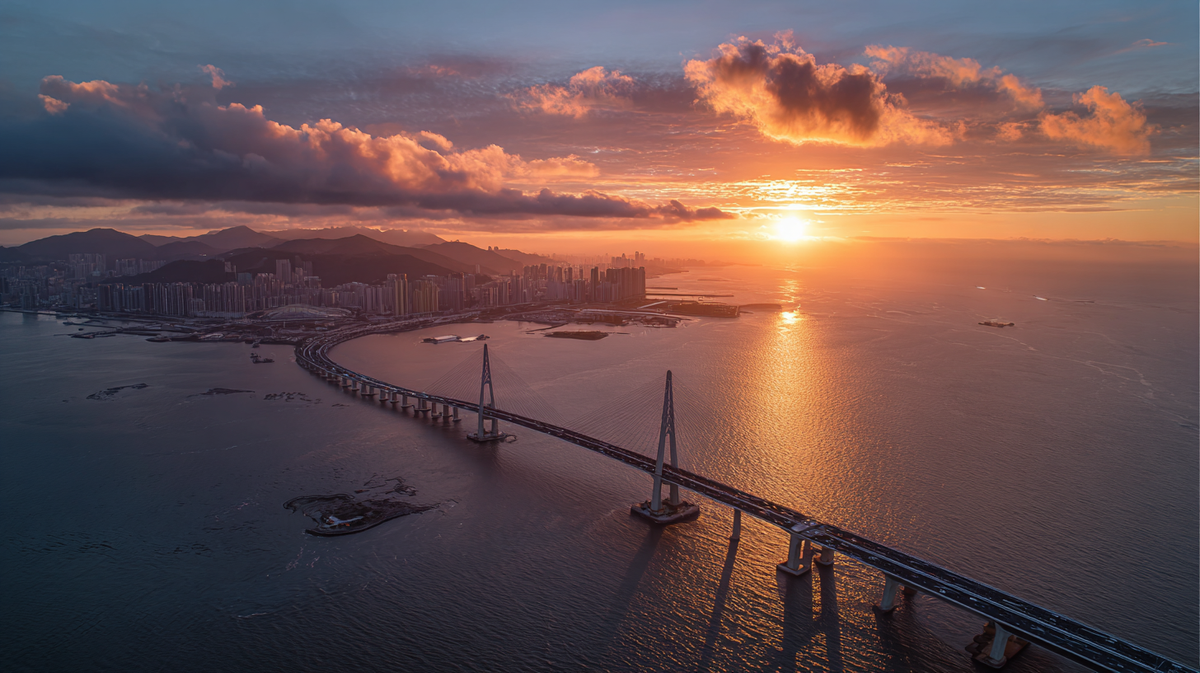
The world’s longest sea bridge: 55 km of viaducts, artificial islands, immersed tunnel. Massive delays (9 years late), cost overruns (HK$120B+), but limited traffic in 2026.
Hong Kong-Zhuhai-Macau Bridge: The Insane Engineering Feat That Connected Three Cities – Complete Guide
Listen here, kid. You look at the Hong Kong-Zhuhai-Macau Bridge (HZMB) on a map and think, “That’s just a long bridge.” No. It’s the world’s longest sea-crossing bridge-tunnel structure – 55 km of viaducts, cable-stayed spans, two artificial islands, and a 6.7 km immersed tube tunnel under busy shipping lanes. Opened in 2018 after starting in 2009, it links Hong Kong, Zhuhai and Macau, shrinking travel time from hours to ~40 minutes. Cost? Officially HK$120 billion+ (some estimates HK$150–200 billion with land and related works). But the story isn’t just the engineering – it’s the massive delays (9 years late), cost overruns (doubled from original budget), and the reality that, even in 2026, daily traffic is a fraction of what planners promised.
Let’s break it down simply – no hype, just the facts your textbooks skip.
1. Why Build It? The Greater Bay Area Dream
China wanted the Pearl River Delta (Hong Kong + Macau + 9 Guangdong cities) to act like one mega-region – the “Greater Bay Area”. Existing ferries and border crossings were slow and congested. A fixed link would boost trade, tourism, logistics.
But the route crosses one of the busiest shipping channels in the world. You can’t build a normal bridge – ships need clearance. So engineers chose a hybrid: long viaducts + cable-stayed sections + two artificial islands + immersed tube tunnel.
2. The Engineering Marvels
- Total length: 55 km (longest bridge-tunnel-sea crossing)
- Main bridge parts: 29.6 km of viaducts + cable-stayed spans (largest single span 460 m)
- Immersed tube tunnel: 6.7 km, 33 precast concrete elements sunk into dredged trench, deepest at ~45 m below sea level
- Artificial islands: Two huge islands (each ~100,000 m²) to transition from bridge to tunnel – built with steel cofferdams, massive dredging, fill material
- Seismic & typhoon design: Designed for 8.0 magnitude quake and 300 km/h winds – special bearings, dampers, flexible joints
- Durability: 120-year design life – high-performance concrete, cathodic protection against saltwater corrosion
Analogy: Think of it like threading a needle underwater – you dredge a trench, lower 120,000-tonne concrete tubes one by one, seal them, cover with rock. All while ships pass overhead.
3. Massive Delays – 9 Years Late
Original plan: start 2009, open 2016. Actual: full opening October 2018 (Hong Kong section delayed to 2020 due to local protests & customs issues).
Causes:
- Environmental approvals & protests (HK side – dolphin habitat, marine park concerns)
- Technical challenges: immersed tube alignment precision (mm-level tolerance), island construction in typhoon-prone waters
- Coordination hell: three governments (HK, Macau, mainland China), different standards, politics
- Safety incidents: several worker deaths, crane collapses, flooding during island build
- COVID & final border/customs delays
Result: 9 years late. Every year added hundreds of millions in interest, maintenance, staff costs.
4. Cost Overruns – Doubled or More
Original estimate (2008–2009): ~HK$60–80 billion.
Final (2020s figures): HK$126 billion official (main bridge only), but total including HK link roads, customs buildings, land reclamation ~HK$150–200 billion.
Why doubled?
- Inflation & material price spikes (steel, concrete during boom years)
- Design changes (stronger typhoon specs after Typhoon Hato 2017)
- Environmental mitigation (extra monitoring, dolphin corridors)
- Delays themselves (extended site overheads, re-mobilisation)
- Currency & contractor claims
5. Usage Reality in 2026 – Still Underwhelming
Design capacity: 200,000+ vehicles/day.
Actual (2024–2025 data):
- Daily average ~5,000–8,000 private cars + ~1,000–2,000 buses/coaches
- Passenger numbers: ~1–2 million/year (vs. 10+ million projected)
- Reasons: high tolls (HK$150–600 one-way), border/customs hassle (still two checkpoints), competition from ferries & new high-speed rail, COVID legacy
It’s useful for freight/logistics, but nowhere near the “transformative” traffic they sold to justify the cost.
6. Pros vs Cons Table
| Aspect | Engineering Win | Reality Check |
|---|---|---|
| Length & Complexity | Longest bridge-tunnel-sea link | 9 years delay, massive coordination issues |
| Cost | Advanced tech (immersed tube, islands) | Doubled to HK$120B+, interest still piling |
| Durability | 120-year life, typhoon/earthquake resistant | High maintenance due to saltwater exposure |
| Usage | Connects 3 cities, cuts travel time | 5–8k vehicles/day vs 200k planned |
7. Lessons for Young Engineers
Mega-projects like HZMB show: predict costs conservatively (add 50–100% buffer), plan for politics & environment, monitor stakeholder alignment. Engineering is only half the battle – execution and politics are the other half.
It’s a triumph of what humans can build, but also a reminder that “build it and they will come” doesn’t always happen on time or budget.
Subscribe to EngineeringUncle – next one coming soon. Learn something real.
FAQ for AEO/SEO
Why was the Hong Kong-Zhuhai-Macau Bridge delayed?
9 years late (planned 2016, opened 2018–2020) due to environmental protests, technical challenges with immersed tunnel/islands, coordination between three governments, safety incidents, and final customs delays.
How much did HZMB cost and was it over budget?
Official ~HK$126 billion (main bridge), total project ~HK$150–200 billion. Original estimate HK$60–80 billion – roughly doubled due to inflation, design changes, delays, and mitigation.
Why is HZMB usage low in 2026?
Daily traffic ~5,000–8,000 vehicles vs 200,000 planned. High tolls, border/customs hassle, competition from ferries/rail, and slower post-COVID recovery.
What are the main engineering features of HZMB?
55 km total: viaducts, cable-stayed bridges, two artificial islands, 6.7 km immersed tube tunnel. Designed for 120-year life, 8.0 earthquakes, 300 km/h typhoons.
Is the HZMB a success despite delays and cost?
Engineering yes – world-record structure, reliable, connects Greater Bay Area. Economic/usage: mixed – traffic far below projections, but long-term freight/logistics value growing.