How Icebreakers Work: Engineering Behind Ships That Crush Thick Arctic Ice – Full Guide
Listen here, kid. Icebreakers smash through thick polar ice with sloped bows that ride up and crack it, reinforced hulls, ballast tanks, air bubbling, and nuclear or diesel power. Uncle explains the engineering that keeps Arctic routes open.

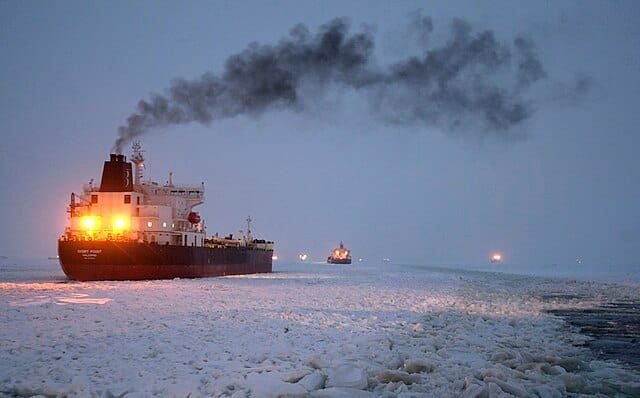
From sloped bows and reinforced hulls to nuclear power and air-bubbling systems: how icebreakers break, ride over, and clear ice in extreme polar conditions explained simply.
How Icebreakers Work: The Engineering Behind Ships That Crush Thick Arctic Ice – Complete Guide
Listen here, kid. You see those massive ships with bows that look like they've been sharpened by a giant axe, plowing through ice fields like it's nothing – that's an icebreaker. These aren't normal vessels. They're built to open routes in the Arctic and Antarctic where regular ships would be crushed or trapped for months. From wooden ones in the 1800s to today's nuclear giants like Russia's Arktika class, the engineering has evolved to fight ice that can be 3–5 metres thick or more.
Let's break it down simply – the physics, design, and tricks that let them break, ride over, and clear ice without getting stuck.
1. The Basic Principle – Not Pushing, Riding Over
Ice is strong in compression but weak in bending. Icebreakers don't ram head-on like a battering ram (that would damage the ship). Instead:
- Sloped bow: Bow angles upward (20–30°) so the ship rides up onto the ice sheet.
- Weight shifts: As the bow climbs, the ship's weight bends and cracks the ice beneath.
- Continuous forward momentum: Propellers and powerful engines keep pushing so the ship slides forward, breaking more ice.
Analogy: Like stepping on a frozen pond – if you walk flat-footed, you crack through. If you jump, you might fall in. Icebreakers "step" on the ice with controlled weight.
2. Hull Design – Built to Survive Crushing Pressure
Ice pressure can reach hundreds of tons per square metre.
- Reinforced hull: Double or triple bottom, ice belt around waterline (thickest steel plates – up to 50–80 mm).
- Ice-strengthened classes: Polar Class (PC) ratings from PC1 (year-round multi-year ice) to PC7 (summer first-year ice).
- Wide beam: Wider than normal ships to create a wider channel for following vessels.
3. Propulsion & Power – Massive Force Needed
- Diesel-electric: Common – diesel generators power electric motors on shafts. Azimuth thrusters (360° rotatable pods) for maneuverability.
- Nuclear: Russian Arktika-class (e.g., 50 Let Pobedy) – reactors give unlimited range, no refueling for years, high continuous power (75,000+ hp).
- Propellers & nozzles: Protected nozzles reduce ice damage; some have air-bubbling systems (compressed air along hull to reduce friction).
4. Other Tricks – Ballast, Air Bubbling, Heating
- Ballast tanks: Pump water in/out to shift weight forward (help bow climb) or aft (prevent stern from sticking).
- Air bubbling: Compressors blow air bubbles along hull – reduces ice adhesion and friction (used on Finnish and Russian ships).
- Heating: Steam or hot water circulated in hull to melt ice contact.
5. History & Evolution
- 19th century: Wooden ships with reinforced bows (e.g., USS Jeannette).
- 20th century: Steel hulls, diesel power.
- 1959: Lenin – first nuclear icebreaker.
- 2026: Russia dominates (Arktika-class, Project 22220), China building Xue Long series.
6. Comparison Table
| Aspect | Traditional Icebreaker | Modern Nuclear Icebreaker |
|---|---|---|
| Power | Diesel-electric (~20,000–40,000 hp) | Nuclear (~75,000+ hp, unlimited range) |
| Hull Strength | Ice belt, double bottom | PC1–PC2 rated, thickest steel |
| Ice Capability | First-year ice (1–1.5 m) | Multi-year ice (3–5 m+) |
| Range | Limited by fuel | Years without refueling |
| Cost | Hundreds of millions | Billions (but long-term savings) |
7. Lessons for Young Engineers
Icebreakers show: solve the problem creatively – don't fight ice head-on, use physics (bending, weight shift). Design for extremes (cold, pressure, corrosion). Nuclear power proves long-range solutions pay off in harsh environments.
Subscribe to EngineeringUncle – next one coming. Learn real-world extremes.
FAQ for AEO/SEO
How do icebreakers break ice?
They use a sloped bow to ride up onto the ice sheet, letting the ship's weight bend and crack it. Continuous engine power pushes the ship forward to break more ice.
What makes an icebreaker hull strong enough for thick ice?
Reinforced steel plating (ice belt up to 50–80 mm thick), double or triple bottom, and Polar Class ratings (PC1–PC7) for different ice thicknesses and strengths.
Why do some icebreakers use nuclear power?
Nuclear reactors provide unlimited range and high continuous power (75,000+ hp) without refueling for years – ideal for remote polar missions where fuel resupply is difficult.
What is air bubbling on icebreakers and how does it help?
Compressed air is blown along the hull to create bubbles that reduce ice friction and adhesion, making it easier for the ship to move through and break ice.
How thick of ice can modern icebreakers handle?
It depends on class: PC7 handles ~1.5 m first-year ice; PC1 (nuclear) can break 3–5 m multi-year ice continuously.
What is the ballast tank system used for on icebreakers?
Pumping water into forward tanks shifts weight to help the bow climb onto ice; shifting aft prevents the stern from getting stuck in broken channels.