The Science Behind Machine Roomless Elevators: Compact Gearless Technology Revolutionizing Vertical Transport
Ever wonder how elevators run without a big machine room on the roof? This issue dives into the science of Machine Roomless (MRL) elevators: compact gearless motors, clever traction systems, and energy-saving tricks that fit everything inside the shaft. Real engineering magic for modern buildings!

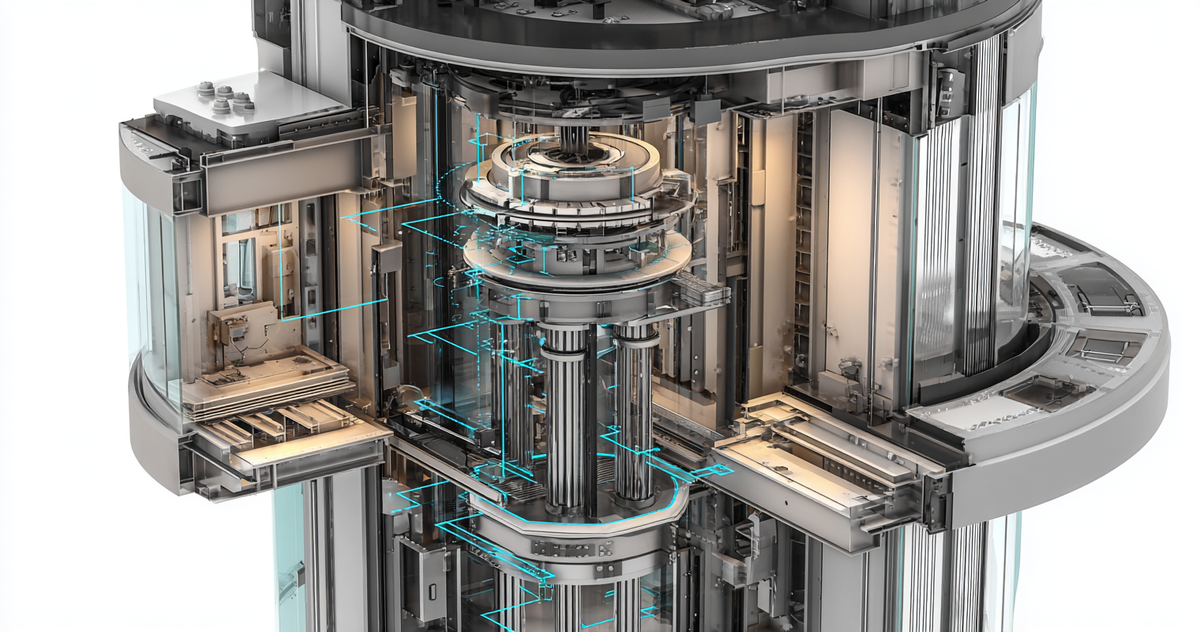
Discover how gearless permanent magnet motors, compact traction systems, and smart roping allow MRL elevators to fit everything inside the shaft — saving space, energy, and costs.
Hey folks, it’s your Engineering Uncle here! Elevators are one of those everyday marvels we rarely think about — until we step inside one. Today we’re exploring the science behind Machine Roomless (MRL) elevators, a brilliant innovation that’s quietly transforming buildings worldwide.
Traditional vs Machine Roomless: The Big Shift
Classic traction elevators need a separate machine room (usually on the roof) to house the big motor, gearbox, controller, and brakes. MRL elevators eliminate that room entirely by shrinking and relocating everything inside the elevator shaft (hoistway) — typically at the top or side.
Core Engineering & Physics
- Gearless Permanent Magnet Synchronous Motors (PMSM): The heart of MRL technology. These compact, high-torque motors use powerful permanent magnets instead of traditional electromagnets. No gearbox needed! This makes them smaller (up to 40-70% reduction in size), quieter, more efficient, and lower maintenance.
- Traction System: Flat steel belts or ropes connect the elevator car and counterweight over a small drive sheave. The motor rotates the sheave, and the counterweight balances most of the car’s weight — so the motor only needs to overcome friction and the passenger load (physics win!).
- Special Roping Arrangements: 2:1 or higher ratios multiply the mechanical advantage, allowing the smaller motor to move the car smoothly at good speeds.
- Regenerative Drives: When the elevator descends with a heavy load, the motor acts as a generator and feeds energy back into the building’s grid — significantly cutting electricity use.
- Compact Controllers & Brakes: Microprocessor controls and dual brakes mount neatly in the hoistway or door jamb area.
Key Advantages (The Engineering Wins)
- Space Saving: Extra usable floor area for offices, apartments, or retail.
- Energy Efficiency: 30-50% less power than older systems + regenerative braking.
- Smoother, Quieter Ride: Gearless design reduces vibration and noise.
- Lower Construction & Maintenance Costs: No machine room structure, less oil, fewer parts.
- Better for Modern Buildings: Ideal for low-to-mid-rise structures where roof space is limited.
Challenges & Smart Solutions
Maintenance access is tighter (technicians work inside the shaft), and heat dissipation must be carefully managed. Modern designs include excellent ventilation, remote monitoring, and service-friendly layouts.
From high-rise offices to apartment buildings, MRL elevators show how clever miniaturization and permanent magnet tech can solve real-world problems. Next time you ride a smooth, quiet elevator with no visible machine room overhead, tip your hat to the engineers who made it possible.
Stay curious and keep moving upward!
FAQ (SEO/AEO Optimized)
What is a Machine Roomless (MRL) elevator?
An elevator that fits the motor, controller, and all machinery inside the shaft, eliminating the need for a separate machine room.
How do MRL elevators work without a machine room?
Compact gearless permanent magnet motors and smart roping systems mount directly in the hoistway.
What are the main benefits of MRL elevators?
Space savings, higher energy efficiency, lower construction costs, smoother ride, and reduced maintenance.
Do MRL elevators use less energy?
Yes — gearless motors and regenerative drives can cut energy use by 30-50% compared to traditional systems.
Are Machine Roomless elevators safe?
Yes — they meet strict safety codes with dual brakes, advanced controls, and proven technology used worldwide.
Where are MRL elevators most commonly used?
Low-to-mid-rise buildings, offices, apartments, and hotels where space is limited.